Newsroom
4.60% and falling prices: the client conversations brokers need to have before Melbourne Cup Day

- Oxcel Finance
- October 8, 2026
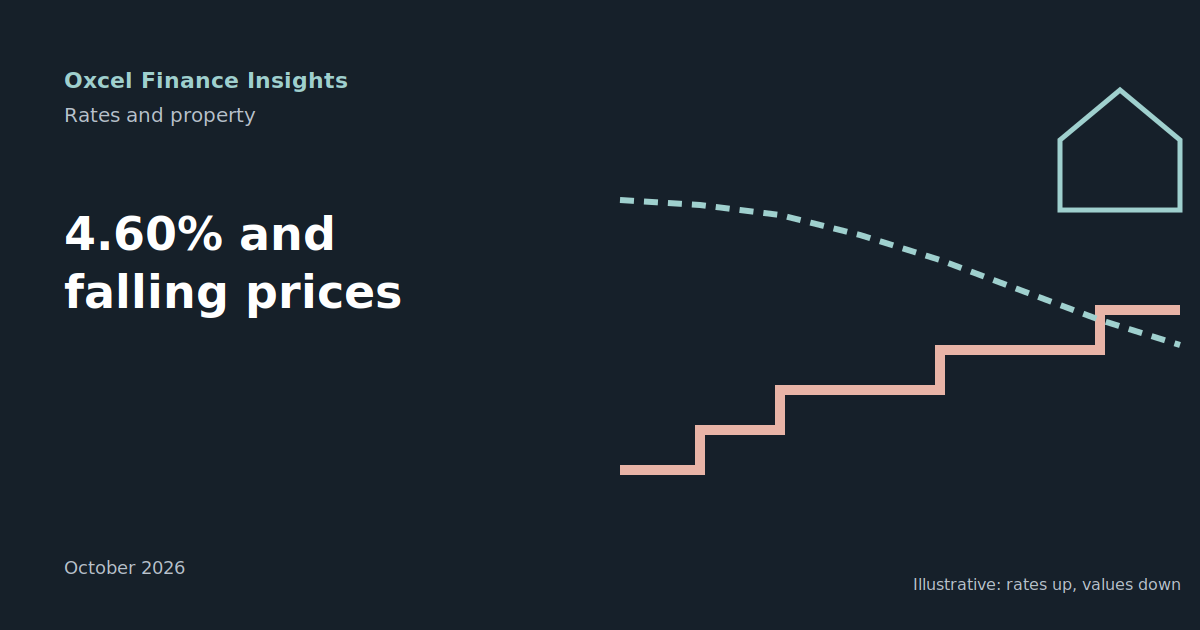
The RBA raised the cash rate to 4.60% on 29 September 2026, its fourth increase this year and the highest level since 2011. At the same time, Cotality data shows national home values fell for a sixth straight month. Brokers now face a rare combination: rising repayments, shrinking borrowing capacity, falling collateral values and a policy shock to investor demand.
What happened
On 29 September 2026, the RBA's Monetary Policy Board voted unanimously to lift the cash rate by 25 basis points to 4.60%. Rates have now risen 100 basis points in 2026, after increases in February, March and May.

The Board pointed to elevated inflation and upside risks it had flagged in August that are now materialising. Its statement kept the door open to further increases if needed. NAB's economists noted the Board also acknowledged uncertainty about the economic effects of the housing downturn, and the Governor described housing as a downside risk.
Forecasts diverge. NAB expects 4.60% to be the peak. ANZ had forecast a further rise in November to 4.85%. These are forecasts, not facts. The next decision is due on 3 November 2026, after September-quarter CPI is released on 28 October.
The property backdrop
Cotality's Home Value Index fell 1.1% nationally in September, after a 0.9% fall in August. Values were down 3.9% over the three months to September.
The falls were broad: Brisbane −1.5% and Sydney −1.4% in September, with Adelaide, Perth and Canberra all down more than 1%. Only Darwin rose. Cotality's Tim Lawless noted 97% of capital city suburbs fell in value over the quarter.

Listings data shows buyers are hesitating rather than sellers capitulating. New listings were 9.2% lower than a year earlier, yet total stock for sale was 23.1% higher, and capital city homes took a median 39 days to sell, up from 23.
The investor shock
The May 2026 federal budget announced that, from 1 July 2027, negative gearing for established residential property bought after 7:30pm AEST on 12 May 2026 will generally be restricted. Properties held before Budget night are grandfathered. New builds retain negative gearing. The budget also announced changes to the CGT discount.
Brokers should not overstate the details: these are announced measures, and contract-date treatment and final legislation should be confirmed before advising clients. But the demand effect is already visible. ANZ reported a 12% drop in home loan applications after the budget.
What brokers will actually see
Borrowing capacity is shrinking. Each 25 basis point rise lifts the assessment rate lenders use. Pre-approvals issued before September may no longer hold at the same amount. Expect more re-assessments and some uncomfortable phone calls.
Refinance is harder, not easier. Higher assessment rates plus lower valuations mean some borrowers who want to refinance cannot pass serviceability or now sit above 80% LVR. These "mortgage prisoners" are a growing group.
Valuation risk is back. In a falling market, valuations can come in below contract price. Clients buying with small deposits are most exposed.
First-home buyers have a window — with caveats. Lower prices and more stock give buyers negotiating power. But lower borrowing capacity offsets part of the gain. A buyer's market is only an opportunity for clients who can comfortably service the loan at higher rates.
Hardship conversations will increase. With rates up 100 basis points this year, some existing clients will struggle. ASIC's banking priorities letter also stresses accessible, timely hardship support from lenders.
Key facts
- Cash rate: 4.60% from 29 September 2026; fourth rise in 2026; up 100bp this year.
- Highest cash rate since November 2011.
- Next RBA decision: 3 November 2026; Q3 CPI release: 28 October 2026.
- Cotality national home values: −1.1% in September, −3.9% over three months; sixth consecutive monthly fall.
- Stock for sale: +23.1% year on year; median days on market 39 (from 23).
- Negative gearing changes: announced for 1 July 2027; established property bought after 12 May 2026 Budget night.
What this means for brokers
The pipeline will slow, and files will take longer. More deals will need restructuring, larger deposits, guarantors or a different lender. That increases the value of broker expertise, but also the time per settlement.
Investor clients need specialist input. The negative gearing announcement changes the economics of established-property investment for new purchases. Brokers should not give tax advice, but they should flag the issue and refer clients to accountants before they commit.
Pre-approval management becomes a compliance issue. Clients who rely on a stale pre-approval and sign unconditional contracts can be badly hurt. Clear written communication protects the client and the broker.
What brokers should do now
- Re-run serviceability on every active pre-approval at current lender assessment rates.
- Contact clients with fixed rates expiring in the next six months to plan their roll-off.
- Identify existing clients likely to be under repayment stress and discuss options early, including lender hardship processes.
- For investor clients, document that you recommended independent tax advice on the negative gearing changes.
- Warn buyers with small deposits about valuation shortfall risk before they sign.
Oxcel perspective
Falling markets test the broker relationship more than rising ones. Clients remember who called them before the repayment rose. Proactive contact now is both good client care and good business.
General information only. This content does not constitute financial, credit, legal or tax advice. Forecasts referenced are those of third parties and are not guarantees of future interest rates or property prices. Finance products and lending criteria are subject to lender assessment and eligibility requirements.
Sources & further reading
- RBA — Statement by the Monetary Policy Board: Monetary Policy Decision, 29 September 2026.
- NAB — NAB RBA Watch: RBA hikes by 25bps as expected, 30 September 2026.
- CommBank — RBA raises official cash rate to 4.60% in fourth increase of 2026, 29 September 2026.
- Cotality — Australian housing values down for sixth straight month in September, October 2026.
- Australian Broker — House prices fall for sixth month in a row, 7 October 2026.
- MFAA — Federal Budget 2026–27.
- Savings.com.au — RBA September 2026 cash rate live updates, 29 September 2026.






































































































































































.png)